 EN
EN
What are you looking for?
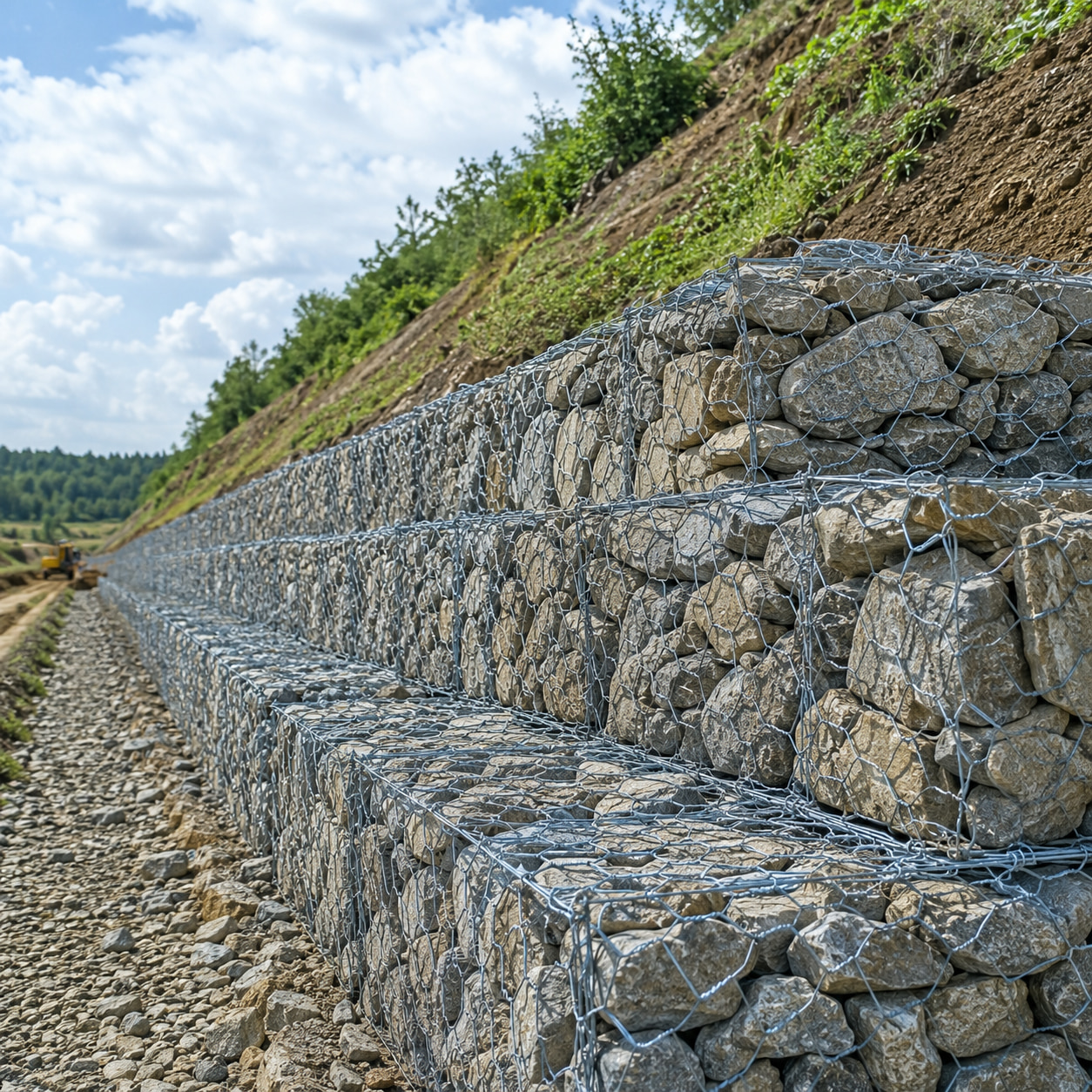
A gabion quotation can look simple until two offers with the same nominal cage size arrive at very different prices. The difference is rarely just the supplier margin. Gabion wire mesh price is shaped by the complete technical package: wire diameter, mesh opening, coating system, selvedge wire, diaphragms, cage dimensions, lacing method, order quantity, packing and destination. A useful comparison therefore starts with specification, not with the lowest price per square meter.
For buyers planning retaining walls, riverbank protection, erosion control or landscape structures, the most reliable approach is to define the required performance first and then compare quotations on an equal basis. The company’s gabion mesh specifications and coating options provide a starting point for discussing custom dimensions and project requirements.
In one sentence Gabion mesh price is primarily determined by the amount and grade of steel used, the corrosion-protection system, the cage configuration, manufacturing requirements, order volume, packaging and freight. |
A thicker wire, smaller mesh opening or heavier coating increases the material and processing cost. A project that needs diaphragms, reinforced edges, PVC coating, special dimensions or strict packing requirements will also cost more than a standard cage. Freight can be a major component because gabion products occupy volume even when shipped flat-packed.
Some buyers ask for one universal price per square meter before confirming the design. That number can be useful for early budgeting, but it is not a dependable purchasing basis. The same area of mesh may contain very different amounts of steel depending on the wire diameter and opening size. It may also have different corrosion resistance depending on the zinc or polymer coating.
For a fair comparison, ask each supplier to quote the same cage size, mesh opening, mesh wire, selvedge wire, lacing wire, diaphragm spacing, coating and packing method. If one quotation omits lacing wire, diaphragms or export packing, the apparent saving may disappear later.
Cost Factor | Why It Changes the Price | What the Buyer Should Confirm |
Wire diameter | Thicker wire increases steel consumption, weight and forming effort. | Mesh wire, selvedge wire and lacing wire diameters separately. |
Mesh opening | Smaller openings generally use more wire per square meter. | Nominal opening and tolerance; verify the opening shape and twist type. |
Steel and coating | Galvanizing, heavy zinc coating and PVC or polymer coating have different costs and service expectations. | Base wire, coating type, coating mass or thickness, color if applicable. |
Cage dimensions | Non-standard length, width or height may require different cutting, folding and packing. | Finished dimensions, panel arrangement and dimensional tolerance. |
Diaphragms and edge reinforcement | Internal partitions and heavier edge wires add material and assembly work. | Number and spacing of diaphragms; edge-wire specification. |
Order quantity | Larger orders spread setup, cutting and packing costs across more units. | Total cages, total square meters or total weight by size. |
Packing and freight | Flat packs, pallets, bundles, labels and container utilization influence landed cost. | Packing method, bundle weight, container plan and destination port. |
Mesh opening and wire diameter should be selected together. A smaller opening is not automatically better, and a thicker wire is not automatically more economical over the full structure. The required combination depends on stone size, cage dimensions, loading, hydraulic exposure, installation method and design life.
The stone should be large enough to remain securely inside the cage, while the mesh must be sufficiently flexible and strong for filling, settlement and service conditions. Project engineers may also specify a heavier selvedge wire around panel edges because these areas receive greater stress during assembly and filling.
Coating selection has a direct effect on cost and expected durability. Standard galvanized wire may be suitable for many dry or moderate environments. More aggressive exposure, prolonged moisture, salt, polluted water or abrasive filling operations may justify a heavier metallic coating or an additional polymer layer.
Do not compare coating descriptions by name alone. Ask for measurable requirements, such as coating mass, coating thickness, adhesion and the condition of the coating after twisting. A higher initial price can be reasonable when the coating system reduces the risk of early corrosion in a demanding environment.
Standard cage dimensions normally offer the most efficient production and packing. Custom sizes are still practical, but they should be clearly scheduled. Long cages often need internal diaphragms to control deformation and keep stone filling evenly distributed. Curves, steps, corners and changes in wall height can increase the number of sizes required.
A clear cage schedule prevents over-ordering and reduces site cutting. It should list each cage size, quantity, diaphragm configuration and any special panels. When a retaining wall uses both full-size cages and thinner mattress units, request separate specifications and pricing for each product.
Gabion cages are usually supplied flat to reduce shipping volume, but the final landed cost still depends on bundle size, pallet use, moisture protection and container loading. A low ex-works quotation may not remain competitive if the packing creates poor container utilization or expensive handling at the destination.
· Ask for the net and gross weight of each bundle.
· Confirm the number of cages and accessories per bundle.
· Check whether lacing wire, spiral binders or fasteners are included.
· Request a preliminary container-loading plan for large projects.
· Specify labeling by wall section or cage size if the site has multiple configurations.
A useful bid comparison places technical and commercial items in the same table. Avoid comparing only the total amount. One supplier may quote a complete system, while another may quote only the mesh panels.
1. Check that cage dimensions and quantities are identical.
2. Compare mesh wire, selvedge wire and lacing wire separately.
3. Verify mesh opening, tolerances and diaphragm spacing.
4. Compare coating requirements using measurable values.
5. Confirm all accessories, packing, inspection documents and shipping terms.
6. Calculate landed cost rather than relying only on the factory price.
A complete request for quotation allows the supplier to respond faster and reduces the risk of revisions. Include the following information:
· Application and project location, including exposure conditions.
· Cage or mattress dimensions and quantity by size.
· Mesh opening, mesh wire, selvedge wire and lacing wire.
· Metallic coating and any PVC or polymer coating requirement.
· Diaphragm spacing, accessories and assembly method.
· Packing, labeling, inspection and destination port.
· Applicable drawing, standard or consultant specification.
For mixed wire-mesh packages, buyers can also review the broader range of industrial wire mesh products available for construction, fencing, filtration and protection projects.
· Choosing only by unit price. A cheaper mesh may have less steel, a lighter coating or missing accessories.
· Leaving the stone size until after ordering. The mesh opening must be compatible with the selected fill material.
· Ignoring edge and lacing wire. These components affect assembly strength and installation efficiency.
· Using vague coating terms. Ask for a defined coating system and inspection requirement.
· Underestimating packing and freight. Container use and handling can materially change the landed price.
Quotations may use different wire diameters, mesh openings, coating systems, edge reinforcement, diaphragms, accessories and packing. Compare the full specification before judging the price difference.
Not necessarily. The correct wire diameter depends on the engineered design, cage size, stone fill, exposure and loading. Excess material can increase cost without solving the actual project requirement.
Usually yes, because it adds material and processing. It may be appropriate where additional corrosion or abrasion protection is required, but the coating specification should match the exposure.
Use a standardized cage schedule, avoid unnecessary size variations, provide complete specifications, optimize container loading and compare landed cost. Early coordination with the supplier can reduce waste and revisions.
Yes, when the selected assembly method uses lacing wire. Confirm the diameter, coating and quantity, or specify approved spirals, clips or fasteners as an alternative.
Send cage dimensions, quantities, mesh opening, wire diameters, coating, diaphragms, accessories, packing and destination. Project drawings and exposure details improve accuracy.
The most useful gabion mesh price is not the lowest number on an incomplete quotation. It is the landed price of a product that matches the wall design, survives the intended environment and arrives organized for installation. A clear specification gives suppliers a fair basis for pricing and gives the buyer a defensible basis for selection.
To obtain a project-specific quotation, send your retaining-wall specifications and destination details. Include drawings or a cage schedule whenever available.