 EN
EN

What are you looking for?
For wholesale purchasing, a complete hardware cloth specification should identify the actual wire diameter, mesh opening, galvanizing method, roll width, roll length, quantity, and packaging requirements. Gauge and opening size alone are not enough for reliable supplier comparison.
The most common sourcing problems occur when two quotations appear to describe the same product but use different wire diameters, zinc treatments, dimensional tolerances, or roll configurations. These differences can materially affect strength, corrosion resistance, shipping weight, and unit cost.
Wire gauge indicates wire thickness, and within the same gauge system, a lower gauge number generally represents a thicker wire. However, professional buyers should not rely on the gauge number alone.
A better RFQ states both:
Wire gauge + actual wire diameter in mm or inches
For example:
19 gauge, wire diameter: ___ mm
This matters because gauge terminology is not always interpreted identically across international markets. Stating the physical diameter gives the buyer and supplier a measurable inspection standard.
Thicker wire is generally preferred when rigidity and resistance to deformation are important. Finer wire reduces weight and material consumption and may be sufficient for screening or lighter-duty applications.
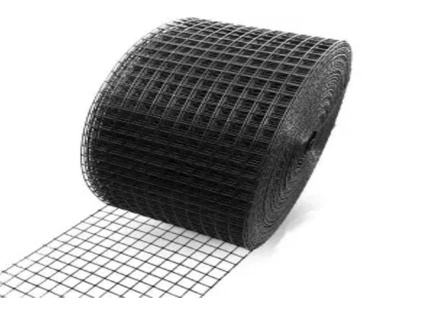
Commercial hardware cloth is available across multiple wire gauges. Market examples include 19-gauge 1/2-inch mesh and 23-gauge 1/4-inch mesh, demonstrating why gauge and opening should always be specified together rather than separately.
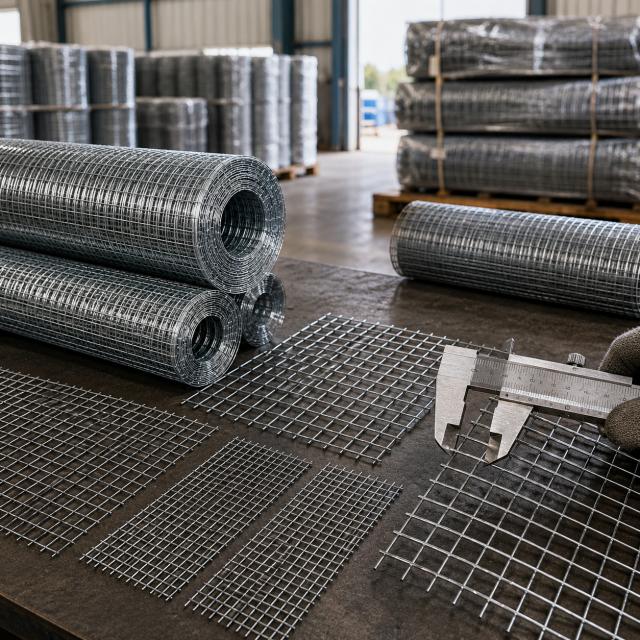
Mesh size describes the clear opening between wires and directly affects containment, screening efficiency, airflow, material weight, and the type of objects or animals that can pass through the mesh.
Common hardware cloth openings include:
1/8" × 1/8"
1/4" × 1/4"
1/2" × 1/2"
1" × 1"
YZ also identifies 1/4-inch and 1/2-inch mesh as common options for protective applications.
Smaller openings are useful where finer exclusion or screening is required, but they usually require more wire intersections per unit area. Larger openings provide greater airflow and visibility and can reduce material consumption.
For welded hardware cloth, mesh opening should therefore be selected according to the actual application rather than assuming that smaller mesh is always better.
Wholesale buyers should also confirm whether the quoted dimension represents the clear opening or the center-to-center spacing. This avoids receiving a product that differs from the approved sample.
When the same gauge convention is used, 19-gauge wire is thicker than 23-gauge wire and will generally produce a more rigid mesh when the remaining specifications are comparable.
However, gauge alone does not determine overall performance.
Consider two products:
Product A: 19 gauge, 1/2" × 1/2"
Product B: 23 gauge, 1/4" × 1/4"
Product A uses thicker individual wires, while Product B has more closely spaced weld intersections. Their weight, stiffness, open area, handling characteristics, and cost will therefore differ.
This is why buyers should compare complete specifications instead of asking suppliers simply for a “heavy gauge” product.
For quality inspection, measuring actual wire diameter with a micrometer or caliper is also more reliable than checking the gauge description printed on the packaging.
This is one of the most important distinctions when sourcing galvanized hardware cloth.
With GBW construction, the wire is galvanized first and then welded into mesh.
It is generally an economical option for applications where cost control is important and environmental exposure is moderate.
The limitation is that welding occurs after the zinc has already been applied. The welding process can therefore affect the protective coating around the intersection.
GAW mesh is welded first and then galvanized.
Because the completed mesh passes through the galvanizing process after welding, zinc can protect both the wires and the welded intersections. Industry suppliers consequently position GAW as the more durable option where improved corrosion resistance is required.
For outdoor fencing, animal enclosures, agricultural protection, or other wet environments, this distinction can be more important than a small difference in purchase price.
Not necessarily.
“Hot-dip galvanized” describes the zinc coating process, while “galvanized after weld” describes when galvanizing takes place relative to welding.
A wholesale RFQ should therefore avoid simply stating:
Finish: galvanized
Instead, specify the required process as clearly as possible, such as:
Galvanized after welding, hot-dip galvanized
or
Pre-galvanized wire, welded after galvanizing
This makes competing supplier quotations easier to compare and reduces disputes over corrosion resistance after delivery.
For projects where coating performance is critical, buyers should additionally define the required zinc coating specification or test requirement rather than relying solely on the term “heavy galvanized.”
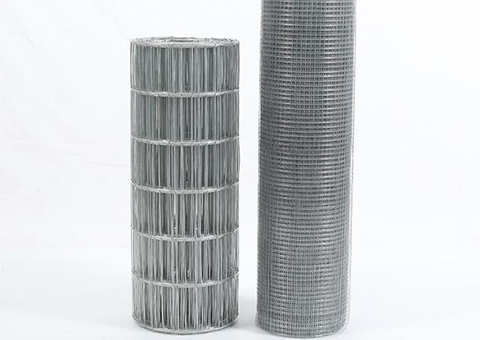
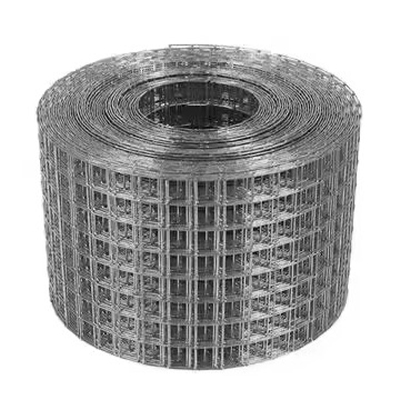
Roll size affects much more than installation convenience. It influences pallet configuration, container utilization, handling, retail packaging, warehouse storage, and freight cost.
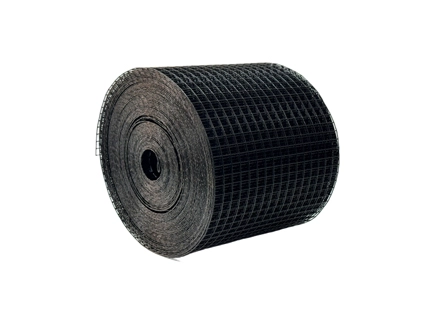
Common commercial widths include 24", 36", 48", 60", and sometimes 72", while 100-ft rolls are widely available in the North American hardware cloth market.
For a wholesaler, however, the best roll size depends on the sales channel.
A distributor selling to contractors may favor longer rolls that reduce joints during installation. Retail programs may require shorter or narrower rolls that are easier to handle and fit standardized cartons or shelf dimensions.
When requesting a quotation from a hardware cloth manufacturer, specify both dimensions:
Roll width × roll length
For example:
48" × 100 ft
rather than simply asking for a “100-ft roll.”
Roll weight is useful as a purchasing and quality-control reference.
If two suppliers quote the same nominal wire diameter, mesh size, width, and length but their theoretical or actual roll weights differ substantially, the specifications deserve closer review.
Possible reasons include differences in:
Actual wire diameter
Roll length
Zinc coating
Mesh spacing
Dimensional tolerance
For container orders, roll weight also affects pallet loading and total shipment weight.
Wholesale buyers should therefore ask for both unit weight and packing quantity before comparing landed cost. A cheaper price per roll may not represent a cheaper price per square meter if the roll dimensions or wire diameter are different.
A professional RFQ should contain enough information for different factories to quote the same product.
A practical specification can be written as:
Product: Welded hardware cloth
Material: Low-carbon steel wire
Mesh opening: 1/2" × 1/2"
Wire diameter: Specify in mm + gauge reference
Galvanizing: GAW or GBW
Roll width: 48"
Roll length: 100 ft
Quantity: Number of rolls or total square meters
Packaging: Waterproof paper, film, pallet or retail carton as required
Application: Agricultural protection / fencing / screening
Special requirements: Labeling, barcode, OEM packaging or dimensional tolerance
YZ operates as a wire mesh manufacturer and wholesaler and states that customized dimensions and OEM coating solutions are available for hardware cloth projects.
Providing the application also helps the factory recommend an appropriate combination if the wire diameter or coating specification has not yet been finalized.
For bulk orders, inspection should focus on measurable characteristics rather than visual appearance alone.
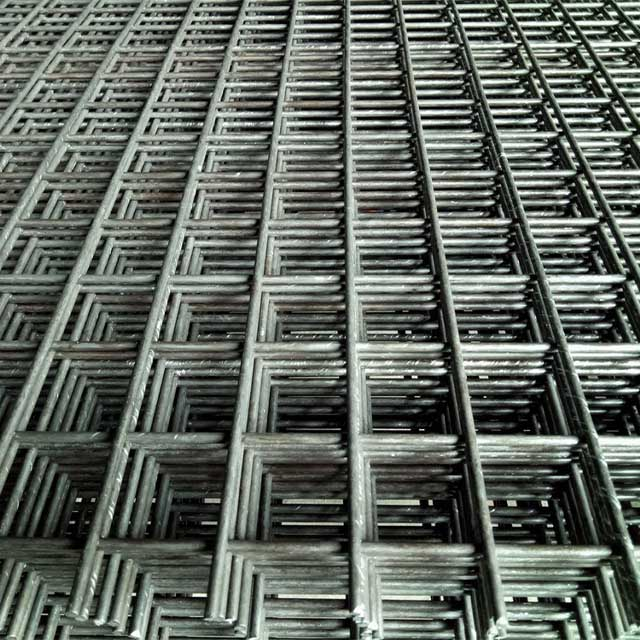
Check the actual wire diameter, mesh opening, roll width and roll length against the purchase specification. Weld intersections should be consistent and should not separate easily during normal handling.
For galvanized products, inspect the overall coating consistency and pay particular attention to weld areas. The coating method stated on the purchase order should also match the production process.
Packaging should be reviewed before container loading, especially for long-distance export shipments where compressed, bent, or poorly protected rolls can create deformation that becomes difficult to correct after delivery.
For repeat orders, keeping an approved production sample and specification sheet provides a practical benchmark for maintaining batch consistency.
Wholesale hardware cloth purchasing should be based on measurable specifications, not general descriptions such as “heavy duty,” “small mesh,” or “high zinc.”
Wire diameter determines much of the mesh's rigidity, while opening size affects screening performance and material density. The galvanizing sequence influences corrosion protection, and roll dimensions affect both installation efficiency and logistics.
When sourcing galvanized hardware cloth or welded hardware cloth in volume, buyers should standardize these parameters before comparing quotations.
Working directly with an experienced hardware cloth manufacturer also makes it easier to coordinate custom mesh sizes, roll dimensions, surface treatment, OEM packaging, and repeat-order consistency.
1/4-inch and 1/2-inch openings are widely used, but the correct size depends on the application.
Within the same gauge system, a lower number generally means thicker wire. Actual wire diameter should still be specified.
100-ft rolls are common in wholesale markets, although other lengths can be manufactured.
Yes. Manufacturers can provide different widths, lengths, mesh openings, wire diameters, finishes, and packaging for bulk orders.